Impact Report 2026

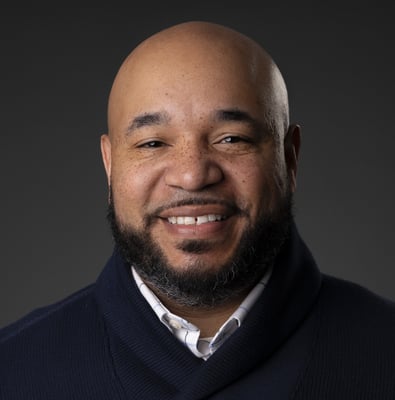
Welcome from Darryl Williams, CEO

Darryl Williams

Creating Dynamic Classrooms for All Children 

The way that we empower educators, leaders, and organizations to transform classrooms into environments where children can flourish matters. The research is clear: teacher quality is the single most important school-related factor influencing student achievement. 


Since our founding in 2007, Teach Like a Champion approaches this work with the belief that teaching is the most important work in the world. We honor the profession by studying game-changing educators, profiling their impactful practices as replicable techniques, and training educators across the world on how they might use or adapt these techniques to achieve outcomes in their own classrooms. 

This work has resulted in robust learning for our team. We are continuous learners, meeting weekly to dissect and study video and artifacts from outstanding teachers, resulting in over 10 published books that have been read by over 2 million educators. Critical to these publications is our video library of outlier educators – over 4,000 clips and counting. Seeing these champions in action has inspired change for countless teachers and schools. 


Adult habits and behaviors are hard to change, and research tells us that a single interaction is unlikely to result in lasting and substantive change at scale. Impact happens when you can inspire change through sustained relationships. The deep relationships we have built with schools and organizations have generated vital learning that informs our approach and support of educators across the world.

Notably, over the past 7 years we have expanded our scope of work to include: 

  • Multi-year, strategic partnerships with school communities and organizations seeking to successfully accelerate the development of instructional leaders and teachers in critical instructional priorities.
  • Curriculum implementation support and professional development using our brand-new Reading Reconsidered Curriculum for American grades 5 through 12 (English System: Year 6 – Year 13).
  • Direct-to-Teacher workshops delivered on-site in schools and districts to ensure that we can reach entire schools or organizations in a holistic and sustained way. 

Our First Impact Report

In this impact report, we aim to share how some of our partners are leveraging TLAC’s resources and support to develop exceptional teachers who strengthen learning outcomes. By sharing stories of impact and data from some of our closest partners—including districts, charter networks, private schools, and education non-profits—we hope to support the work you and your colleagues are already undertaking to pursue and achieve your strategic priorities. To learn more about our work, please reach out to us and our featured partners and learn with us through our blog, published books and videos, and international workshops. 

We believe it is critical to share how some of our partners are leveraging TLAC’s resources and support to develop exceptional teachers who strengthen learning outcomes. Through sharing stories of impact with partners (Stories of Impact Series), we invite others to learn with us through our blog, in published books and video, and during our international workshops.

To all our partners and collaborators, we thank you for allowing us to learn from you, and more importantly, for all you do to ensure your students receive the exceptional education they deserve. The stories highlighted in this report reflect our deep respect and admiration for the amazing work you continue to do on behalf of children and families. We are honored to continue our work alongside you, ensuring every classroom is radically better on behalf of our kids and families!

With deep respect and gratitude,

Darryl Williams, CEO, Teach Like a Champion

 Spotlight on Texas: Harmony Public Schools

Sustained Success at Scale

By number of students served, Harmony Public Schools ranks in the largest 150 school districts in the US: over 300 leaders, 42,000 students, and 60 campuses spread across the state of Texas. Our 30-month partnership had two fundamental goals:

  • Build capacity and raise student achievement across a huge organization
  • Ensure sustained success after our partnership ended
Map-Harmony

Impact at Harmony Public Schools

Harmony Data

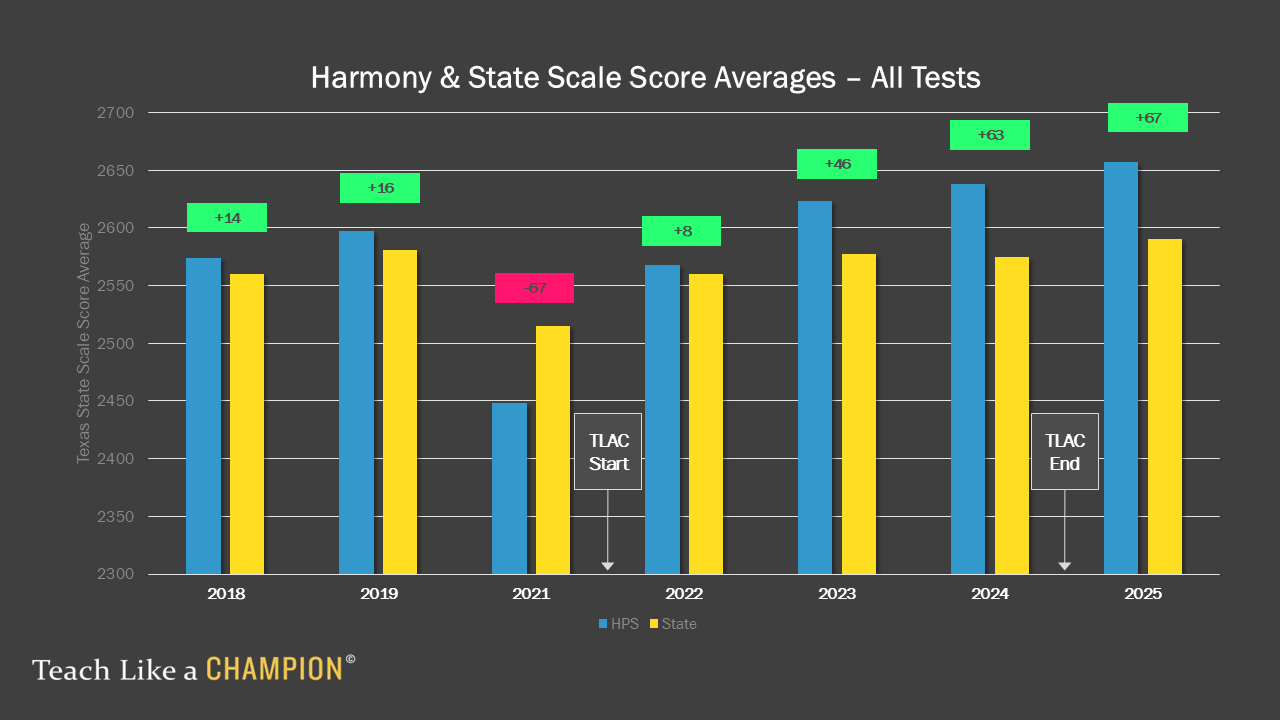
In the first year of working together (post-pandemic), we helped Harmony return to the positive trajectory they were on prior to COVID-19 and then helped them improve dramatically. Most importantly to us, that growth continued (and improved!) after our partnership ended.

How We Did It

Harmony sought our collaboration to develop a comprehensive vision for effective instruction and support for the development of leader capacity to drive that vision forward. We began by co-creating an instructional Arc of the Year, a tool that guides priorities and aligns teacher and leader actions across the year.​ We anchored their leadership vision in the “Core4” –the key capacities all leaders need to ensure effective teaching: 

  • Coaching Lesson Preparation
  • Observation-Feedback
  • Student Work Analysis
  • Practice-Based Professional Development

 Harmony’s senior leaders identify their leaders’ increasing effectiveness with executing the Core4 as a key driver of results.  

 At Harmony, the Arc of the Year has become our instructional north star. It defines what excellence in the classroom looks like and helps every leader and teacher align around that shared vision. 

Burak Yilmaz, Director of Instruction, Harmony Public Schools 

After launching the Arc of the Year, our work included:

  • Developing Harmony’s “Core4” leadership skills via trainings, checklists, planning guides, and collection and study of video and documents
  • Conducting site visits to study progress
  • Building capacity in Harmony’s 7 regions (districts) to study local trends and create responsive leader training
  • Creating a robust, easy-to-use video and artifact collection system that Harmony continues to use to study bright spots and drive development

Harmony’s student achievement data improved during each year of our partnership beginning in 2021. However, we most measure the success of our partnerships by what happens after our work with a school, district, or network has ended. Do key leader and teacher actions continue? Does student achievement improve?

In 2025, a year after our partnership’s conclusion, we were especially happy to see Harmony had their highest performance to date: their scale score average across state tests outperformed the state average by 67 points. Sustained success after we leave–nothing is more gratifying to us.

Schools are such complex organizations that growth in student achievement in a single school or large district is always the result of multiple factors. Although TLAC contributed to Harmony’s sustained success, the credit goes to the leaders and teachers across the organization. It is their collective effort that has yielded such impressive results.

 With TLAC support, we invested so much into building capacity with our coaches and school leaders to sharpen their Core4 skills. Through this work we’ve been able to ground every conversation around the Arc of the Year and the Harmony Core4. That consistency is what’s allowed us to sustain growth across years and across campuses in such a large state-wide network. 

Burak Yilmaz, Director of Instruction, Harmony Public Schools 


 Spotlight on Texas: Amarillo ISD

Like many districts around the country, Amarillo ISD has invested significantly in High Quality Instructional Materials (HQIM) for literacy and math in grades K-8. And as many school leaders know,  simply investing in high quality instructional materials is not enough to drive student results: The materials need to be taught well. Amarillo ISD partnered with us on two initiatives, one focused on elementary literacy and the other on middle school math, to invest in and build teacher and leader capacity to effectively  implement their chosen curricula across 34 elementary schools and 12 middle schools. 

From studying outstanding teachers and schools, we know that excellent instruction begins with intentional lesson preparation, and that schools need strong systems to support teachers with effective lesson preparation using their HQIM. In both our literacy and math projects, we have helped Amarillo ISD:

Map-Amarillo
  • Develop a shared vision and vocabulary for excellent literacy and math instruction in the context of their chosen curricula
  • Experience in-person Professional Development that makes the vision concrete and clear, via video and practice of research-based instructional techniques
  • Find, study, and uplift lesson preparation, instruction, and coaching Bright Spots from within Amarillo ISD’s own schools and classrooms
  • Support consistency across the district by norming on literacy and math-specific look fors through regular site visits to study classrooms side-by-side and ongoing video study
  • Build school and network instructional leader capacity to sustain the work after our partnership concludes


 I have been an educator for 26 years, 16 of those as a principal. I have been to many trainings throughout my career. Reading Reconsidered and TLAC trainings have been the most useful ones I have attended. The most useful part of our partnership is having the TLAC team come for site visits. I have learned so much from our collaboration about observing teachers and providing actionable feedback. 

 -Ginny Smith, principal of Mesa Verde Elementary School 

Impact at Amarillo ISD

 On average, schools that participated in deep partnership work demonstrated gains for both reading and math STAAR results. 

ELA

We know that ELA scores are particularly challenging to move, especially when we think about the diverse needs of all learners. Of the eight elementary schools that participated in the pilot year of our deep partnership work:

  • Seven schools saw gains in average ELA STAAR results across grades 3, 4, and 5.
  • Four schools saw an overall increase of at least five points.
  • Three schools demonstrated significant gains with double digit increases in the percentage of students scoring meets or masters.
Math
  • 6th grade classrooms were a particular bright spot in the pilot year: average gains were in the double digits on the Texas STAAR exams.
  • At Travis Middle School, where 97% of students are economically disadvantaged, 6th grade posted a 25 percentage point gain. 

 TLAC is a valuable partner, truly one of the best of my career. Their team listened and learned about our teachers, our coaches, and our instructional strengths and struggles and tailored a support system that met our needs and, more importantly, moved the needle in student achievement. When we faced a struggle, they had an answer and a pivot that got us back on track. Each member of the TLAC team is kind, brilliant, and highly skilled in instruction and coaching. 

 -Jennifer Wilkerson, Assistant Superintendent, Curriculum and Instruction 

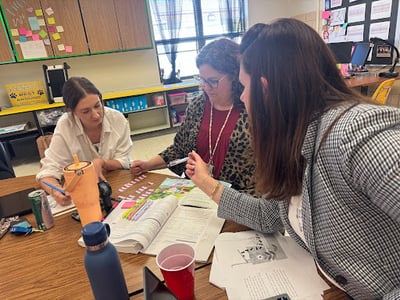
Coplanning with Amarillo District leaders and teachers
Co-planning with Amarillo ISD leaders and teachers
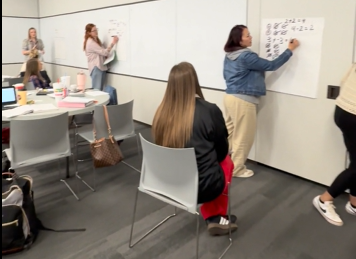
Middle School math teacher practice modeling in TLAC facilitated PD.
Middle school math teachers practice modeling in TLAC facilitated PD.

 Science of Reading Data Cohort

Research shows that roughly half of overall reading comprehension is predicted by oral reading fluency.  When a student reads below the benchmark of 110 words correct per minute, much of their working memory is devoted to decoding the words, leaving limited capacity for understanding the meaning of the text. Fluent reading is therefore a prerequisite to strong comprehension, and its absence is one of the most pervasive barriers to understanding for readers at all grade levels. Yet fluency remains an overlooked part of most reading classrooms, especially in middle and high school. The good news is that, by building intentional reading structures and supporting teachers in developing  fluency, we can change a student’s reading experience from the outside in.

 My students have grown in ways I never expected. Their increased fluency has also helped with their comprehension!

 -Jaime Johnson, 2025-26 Data Cohort Member 

The Need: Supporting Teachers in Fluency Development

Teachers in our Data Cohort wanted to improve students’ oral reading fluency. They also wanted to create classroom cultures where reading aloud feels safe and where students who struggle receive support to confidently grow as readers.

The Teach Like a Champion reading team partnered with a group of teachers and coaches who use the Reading Reconsidered curriculum. Together we engaged in:

  • Remote workshops focused on building FASE Reading  (Fluent, Attentive, Social, and Expressive) routines, planning for proactive and responsive fluency support, and building a positive, safe reading culture
  • Video-based reflection, with each teacher recording their classrooms at multiple points across the year
  • Video collaboratives where teachers studied one another’s video to replicate effective practices

This cycle -- study, test, capture, reflect, and refine -- illustrates that fluency development is possible through observable and teachable practices. At the conclusion of the Data Cohort, a teacher commented, “I am now the kind of teacher who knows what to do when I hear things like wooden or choppy reading! I am now the kind of teacher who recognizes and fixes students' fluency issues in the moment! I am much braver to do these things, and I know that it benefits students!”

Impact of TLAC Data Cohort

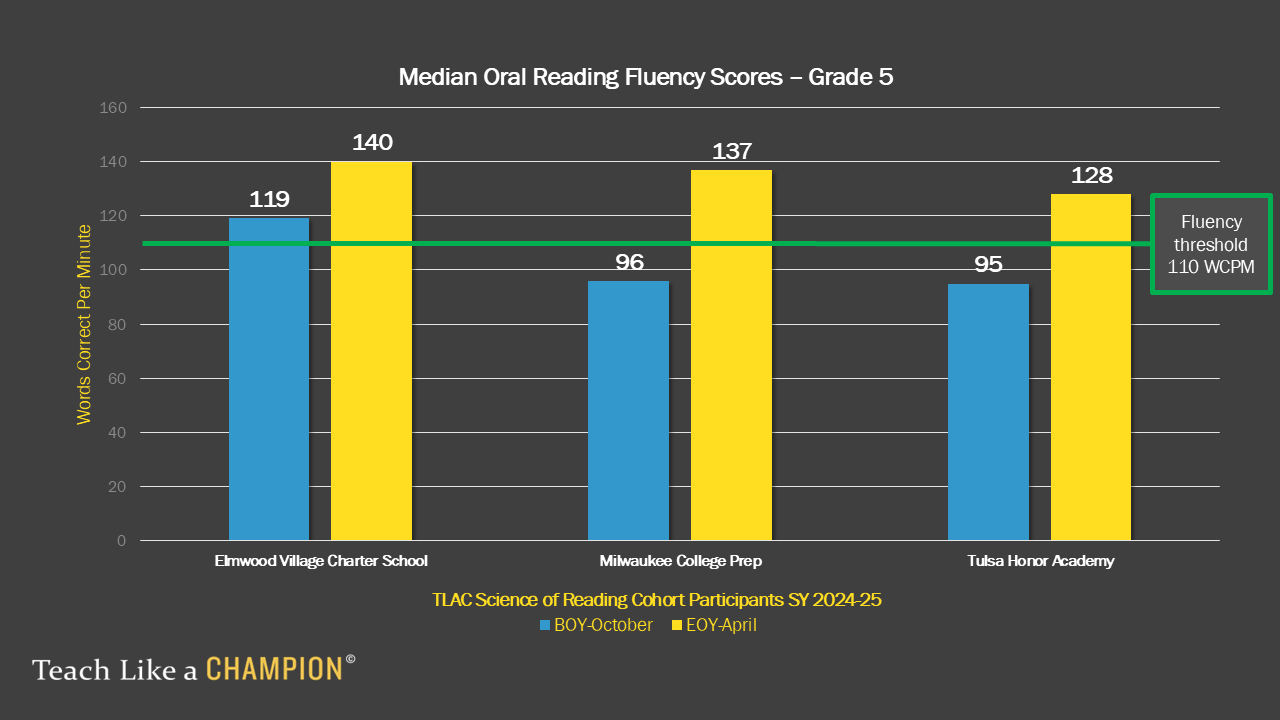
Across all participating schools and grade levels, results showed consistent improvement.

  • Median fluency increased from below the comprehension threshold - 96 words correct per minute (WCPM) - to above the comprehension threshold - 137 WCPM.
  • Struggling readers showed the greatest growth in fluency across all classes. Though people often assume that struggling readers remain struggling readers throughout secondary school, this data tells another story.
  •  Fluency practice benefited strong readers as well. In one cohort school, eighth graders moved from 80% to 88% fluent, with students improving by an average of 17 WCPM over the year. 
Cohort teachers reported additional positive impacts:
  • One teacher remarked that “perhaps the strongest impact is the culture of reading [...] FASE provides both a safety and a structure for students to learn through positive interactions with the text.”
  • Another teacher noticed that students are volunteering to read in social studies, math, and science. These classes have a lot of difficult words and they are up for the challenge whereas they may have been a little reticent at the beginning of the year.

This work demonstrates that with the right structure and support teachers can help students read fluently, attend to meaning, and love the experience of reading a book together.

Reading Cohort

 Teacher Excellence: TLAC Fellows

Over the past several years, teachers have been required to continuously adapt to an ever-changing educational landscape, and students have increasingly urgent learning needs in the age of cell phones and post-pandemic learning gaps. Across the country and around the world, schools are struggling to attract and keep top teachers in classrooms. We started the TLAC Fellowship to develop and honor great teachers to incentivize them to stay in the classroom and share their expertise within and beyond their schools.


The most recent cohort of Fellows was our third; they began the two-year program in January of 2023 and concluded in January 2025. Our twelve Fellows came from elementary, middle, high schools, and medical schools across the country, from California to Minnesota to Georgia to New York. Two of our Fellows joined us from the United Kingdom, bringing an international perspective to the program.

Through a series of remote and in-person engagements, Fellows have the opportunity to attend our workshops and receive personalized support and development designed to position them as models of excellence in day-to-day teaching and to share their learnings back within their organizations. Fellows also regularly share videos of their teaching with us and with each other, providing opportunities for collaborative feedback and allowing us to continue to refine and develop our library of effective teaching videos. We show video clips of our Fellows in our workshops around the world, and Fellows take these clips and learning back to their own organizations so that their learning and excellence can scale across classrooms.

I found the TLAC Fellowship when I was considering leaving the classroom and education altogether, but this experience is why I chose to remain in this profession.

-Teach Like a Champion Fellow, Cohort 3

Fellows Spotlight: TLAC in Medical Education

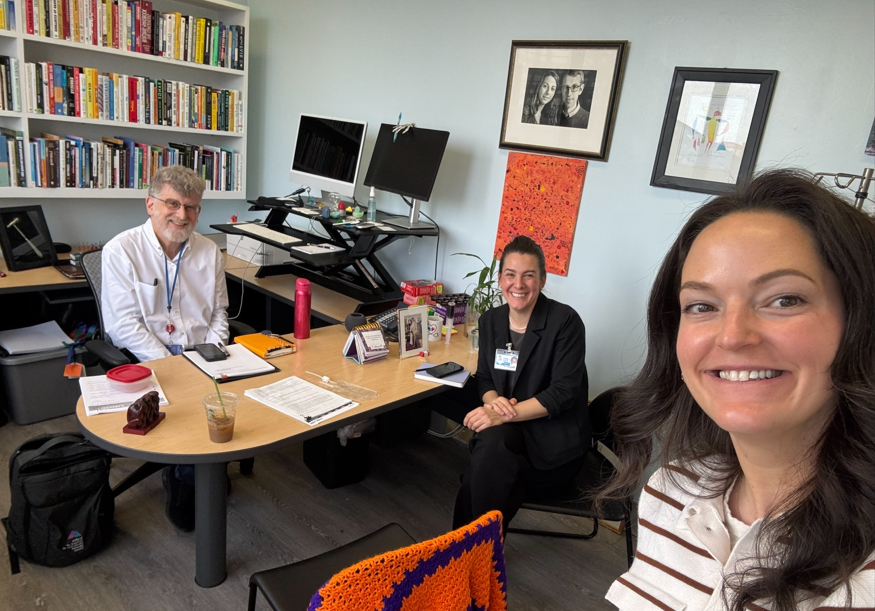
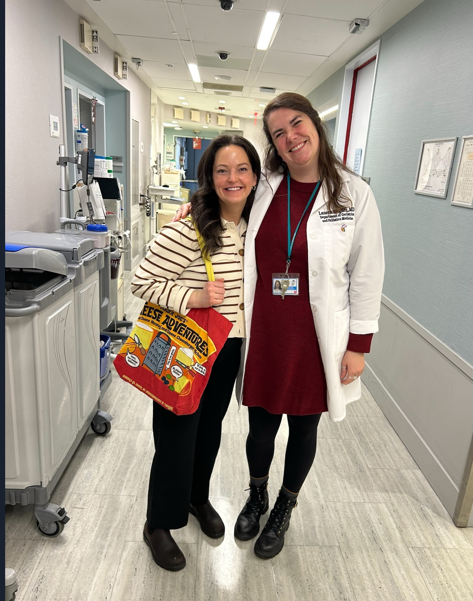
 Two of our Fellows from the most recent cohort are medical educators, Dr. Bob Arnold and Dr. Rene Claxton, from the University of Pittsburgh School of Medicine. Bob, Rene, and colleague Mollie Biewald (currently a cohort 4 Fellow) were interested in a question that fascinated us, too: Can TLAC techniques be used effectively with adult learners in the medical education space? Their final project in the Fellowship was to conduct an investigation into the impact of remote learning of key TLAC techniques for student engagement on medical educators’ learning experience and participation. They collected data on learner participation in various educators’ classes at Mt. Sinai School of Medicine, and then designed and facilitated four one-hour sessions on TLAC techniques for colleagues at Mt. Sinai.  

Sadie-Bob-MedEd
MedEd-Fellow

Because of Bob, Rene, and Mollie’s exploration of TLAC techniques in medical educators’ spaces, we’ve been able to finalize videos of them and their colleagues and develop a professional learning series titled “Engaging Academics in Medical Education.” Bob and Rene now co-facilitate those sessions with the TLAC team, and we’ve trained over 100 medical educators in key techniques like Everybody Writes, Cold Call, and building strong Cultures of Error for medical learners.

Fellows Spotlight:  Effective Teacher-Led Professional Learning Communities, Gwinnett County 

Middle-school math teacher Doug Doblar of Bay Creek Middle School in Gwinnett County, Georgia, had always enjoyed collaborative working relationships with his colleagues, but his time as a TLAC Fellow inspired him to make his campus professional learning communities even more focused and effective. Doug took the Fellowship learning model of technique study, collaborative planning, and video review and adapted it for his colleagues to use in weekly development meetings. Through regular cycles of video collection and peer feedback, Doug and other teachers at Bay Creek were able to build a common vocabulary of effective teaching and support each other in driving stronger results for students. 

Doug’s principal described the impact of the Fellowship across Bay Creek: “Dr. Doblar has been very intentional with spreading his learning to a group of other top teachers, who in turn have spread these ideas further. The learning from TLAC is beginning to permeate across the school. It is a big part of our school improvement plan for next year. The Fellowship has been an absolute godsend for our school.” Doug’s colleagues were so positively impacted by his time as a Fellow that one of them, ELA teacher Jaime Johnson, was recently chosen as a Fellow for Cohort 4. 

Fellows-Cohort-4-First-Meetup
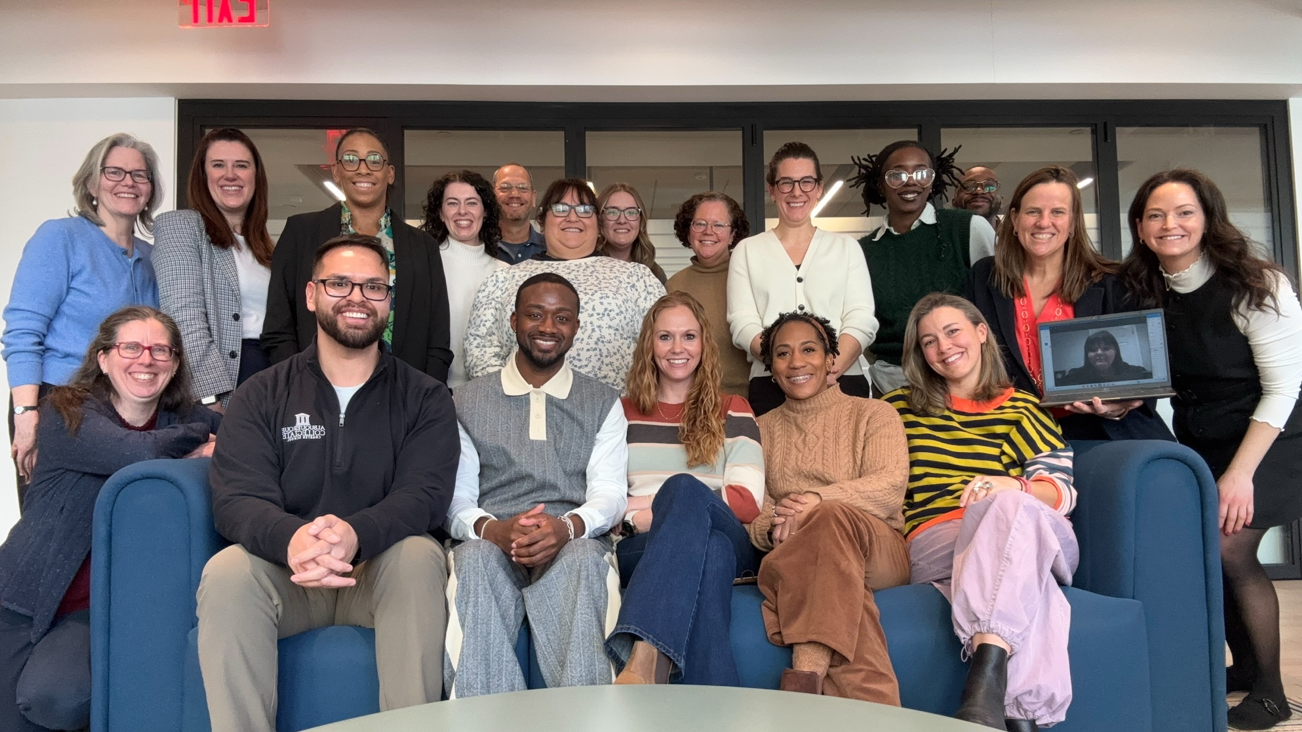
TLAC Fellows - Cohort 4

Spotlight on Tennessee: Funder Supported Multi-Year Impact

Impact Report State - MSLC

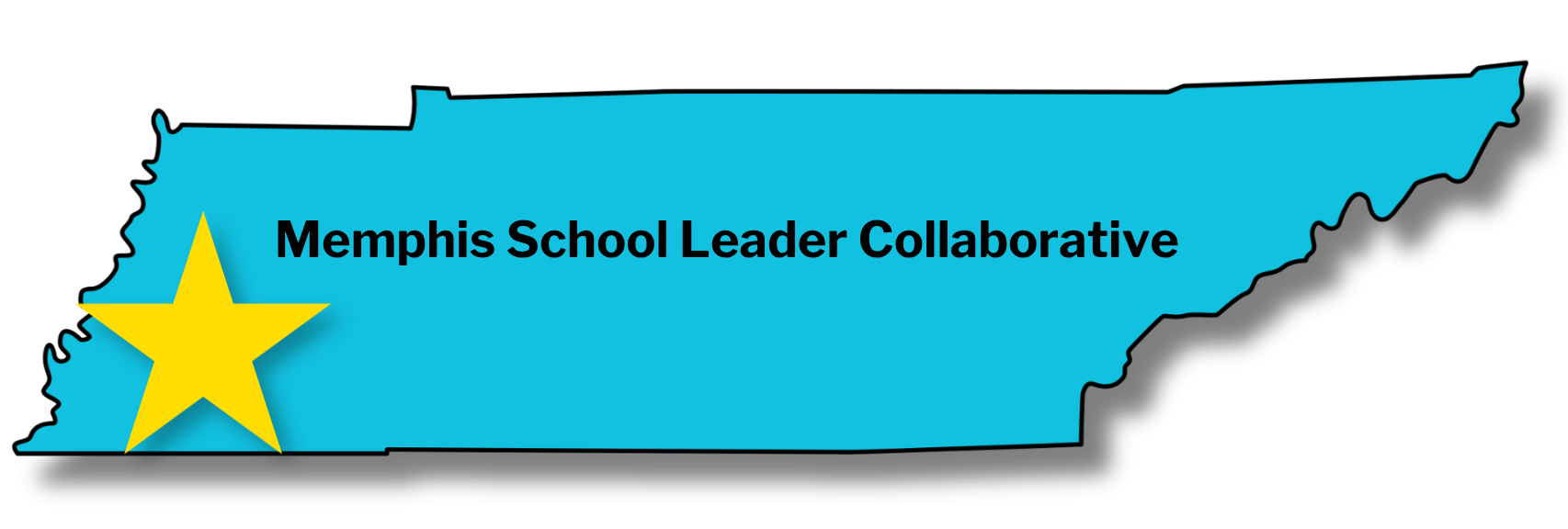
Teach Like a Champion’s Memphis School Leadership Collaborative (MSLC) brings together leadership teams from high-capacity schools across Memphis to study, adapt, and implement effective instructional and school leadership practices in pursuit of improved student outcomes. Through shared learning, coaching, and site-based application, MSLC supports leaders in clarifying instructional priorities, aligning vision to practice, and accelerating progress toward ambitious academic goals. Since its launch, the collaborative has served as a vehicle for cross-school learning and sustained improvement, with a particular focus on strengthening math instruction citywide.

 This year’s MSLC has been hands down some of the best PD I have received in my role! The combination of PD and practice labs, check-ins, leader-to-leader collaborative time, site visits, and other supports have allowed me to make sure my teachers are on the right path to success. It has been so valuable to see classrooms of teachers outside of my school who are all working together on the same focus area.

- MLSC Participant 

Impact on Memphis Schools

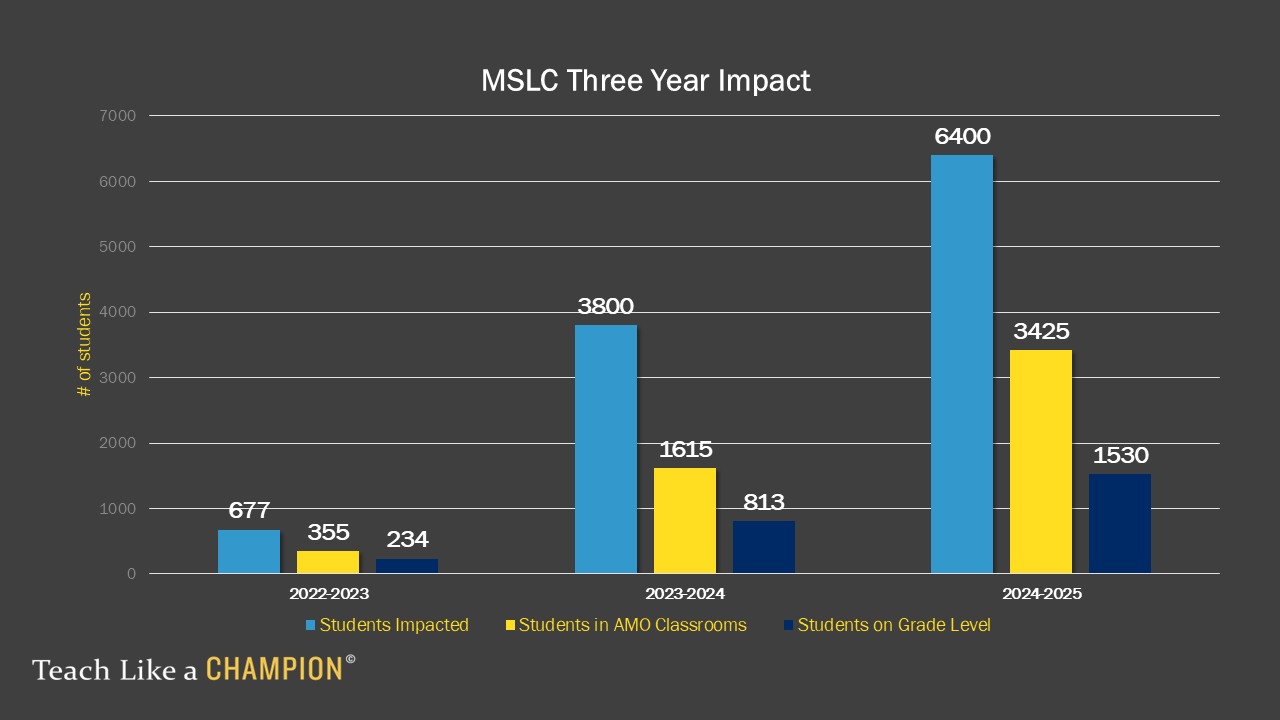
During the 2024–2025 school year, the Memphis School Leadership Collaborative (MSLC) delivered its strongest impact to date, reaching 18 campuses across eight charter networks and impacting more than 6,400 students. Now in its third year of a focused math strategy, MSLC sharpened its theory of change by centering leaders’ capacity to build and sustain the academic systems that enable high-quality, Lesson Delivery Model (LDM) aligned instruction at scale.

MSLC data

 Even as MSLC has exponentially grown in size year after year, the number of students reaching proficiency has continued to rise, demonstrating our ability to scale impact without compromising effectiveness.

  • MSLC has rapidly scaled its reach, growing from 677 students in 2022–2023 to 6,400 students in 2024–2025.
  • As the program expanded, student proficiency kept pace, increasing from 234 to 1,530 students on grade level over three years.

A Multi-Year Effort

MSLC’s math focus emerged in response to a stark post-pandemic reality. Following COVID-19 disruptions, math achievement declined sharply across Memphis, with proficiency rates falling well below pre-pandemic levels and disproportionately impacting economically disadvantaged students. In 2021, fewer than one in ten Shelby County students demonstrated math proficiency, with rates even lower for students from low-income backgrounds. In response, schools participating in the 2022–2023 MSLC committed to math as a shared area of focus, piloting evidence-informed instructional practices while leaders engaged in professional learning, site visits, and coaching cycles. Early results were promising: pilot classrooms showed substantial projected gains in student proficiency.

Isolated success was not enough. MSLC therefore evolved from a pilot focused on individual classrooms into a multi-year effort centered on scaling impact through leadership, systems, and instructional coherence. The 2024–2025 school year represents the strongest expression of this evolution and the most significant impact to date.

Through coherent systems for unit and lesson unpacking, practice-based professional learning, coaching cycles, and data-driven response, MSLC supported schools in strengthening instructional infrastructure while tracking implementation fidelity and outcomes. End-of-year data show meaningful progress: 58% of participating classrooms ranked in the top half of the district, with more than 20% in the top quintile, and overall math proficiency across MSLC classrooms continued its multi-year upward trajectory. Notably, MSLC students now outperform the district’s pre-pandemic math averages, a critical milestone in a city still recovering from pandemic learning loss.


 MSLC has been one of the most impactful academic investments in our portfolio and represents what is possible when expertise is paired with true partnership and support between providers, schools, and funders. The program has underpinned our collective vision of improving math academic outcomes for students in Memphis with its highly effective and efficient train-the-trainer model. Not only does this model allows us to reach more schools and provide more students with access to quality math instruction that is curriculum agnostic, but it is also highly sustainable once schools have embedded the systems taught in MSLC within their infrastructure. We also recognize how critical the on-the-ground work that the MSLC team has provided to Memphis school leaders especially in terms of coaching and implementation support, which has led to such strong outcomes for schools in our portfolio.

- Binh Doan, Memphis Education Fund Director of Finance & Strategy  


TLAC by the Numbers

4,000 clips and counting in the TLAC video vaults!
38 public workshops offered remotely or in person
Our Reading Reconsidered Curriculum puts more novels back in classrooms across the globe.
Teach Like a Champion training is actively used in 20 countries and growing!

Participants leave TLAC workshops ready to implement techniques with all students

TLAC workshops are engaging, clear... and FUN!
The Monday Morning Test: Workshop attendees affirm that content and techniques will immediately impact classroom instruction.
Even repeat attendees find tremendous value in TLAC content.

Districts across the country bring TLAC to them! 

Our library of ready-to-use workshop content grows every year.

TLAC Online modules help new teachers practice independently - with more content every year.

It is our pleasure to serve schools. It's what makes our team happy!
Team Photo cropped

Impact Report 2026